When Agents Become Infrastructure
Introduction
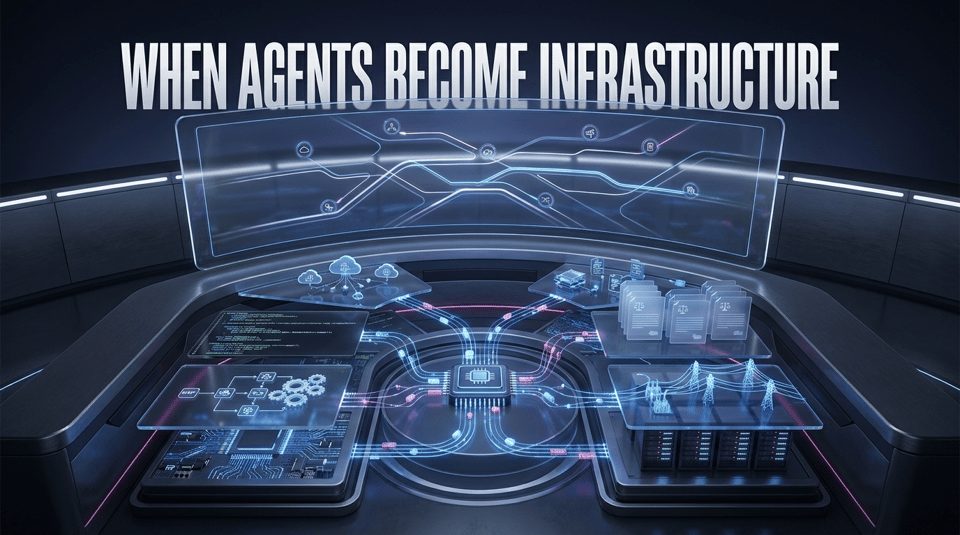
The last issue tracked what happened when AI's costs started landing outside the lab and into budgets, infrastructure, and labor markets. This cycle shows the next stage: agents are being packaged as infrastructure. Google used I/O to turn Gemini into a control layer for development, search, shopping, Android, Chrome, and managed agents [1]. OpenAI and Dell moved Codex toward hybrid and on-premise enterprise deployment, while Dell framed its AI Factory as a way to bring leading models into controlled enterprise environments [2][3]. SAP and Microsoft positioned autonomous enterprise systems as governed business platforms, not experimental copilots [4][5]. GitHub exposed Copilot cloud-agent work through APIs, making agent tasks programmable infrastructure rather than an interface feature [6].
The story is no longer whether models can act. It is who controls the action surface, where the agent runs, what evidence it leaves behind, and who pays when it fails. AISI's latest cyber work estimates that the length of autonomous cyber tasks frontier models can complete has been doubling on the order of months, not years [7]. Reuters reported that U.S. lawmakers are moving to counter Chinese AI-tool sales abroad, extending strategic competition from chips into deployed systems [8]. The utility sector is reorganizing around AI load, with NextEra and Dominion's merger thesis tied directly to data center demand and power-bill politics [9]. And in banking, executives who spoke bluntly about AI replacing workers were immediately forced into apology and reassurance mode [10][11].
The May 25 signal is that agents are crossing from product feature to operating substrate. That makes the control plane, not the chatbot, the strategic battlefield.
Technology Signals

Google Turns I/O Into an Agent-Platform Launch
Google's I/O 2026 package was less a routine model-release cycle than a platform consolidation move. The company announced Gemini Omni, Gemini 3.5, Google Antigravity, Universal Cart, and a broad set of agentic product surfaces across Search, Shopping, development, Android, and the browser [1]. The developer keynote made the shift explicit: Google said it has moved from AI that assists to agents that can independently navigate complex tasks across a workflow [12].
The important part is the bundling. Antigravity 2.0 and Antigravity CLI provide development surfaces. Managed Agents in the Gemini API provide remote sandboxes. Chrome DevTools for agents gives software agents a browser-debugging interface. WebMCP proposes a structured way for browser-based agents to execute web tasks. Android CLI and Android skills let agents reach into native mobile development workflows [12]. Google is trying to make the browser, mobile stack, cloud, and developer environment agent-addressable at the same time.
That is a larger signal than Gemini 3.5 by itself. Model launches still matter, but Google is now competing on the orchestration surface around the model. The moat is not only intelligence. It is how many places the agent can safely act.
Gemini 3.5 and Gemini Omni Need Model-Card Discipline
Google's Gemini 3.5 and Gemini Omni announcements should be read alongside the model cards, not just the keynote. The Gemini 3.5 Flash and Gemini Omni Flash cards are primary documentation for limitations, mitigations, and safety performance [13][14]. That matters because the products around these models are increasingly action-oriented. A weak model in a chat box produces a bad answer. A weak model embedded in a shopping flow, migration agent, browser tool bridge, or cloud sandbox can trigger downstream work.
This is why the issue's lead is not simply "Google caught up" or "Google shipped a new Gemini." The practical question is whether model cards, sandboxing, credential masking, hardened Git policies, and deployment boundaries mature as quickly as the agent surfaces themselves. Google is clearly trying to pair model capability with productized control mechanisms. The gap to watch is whether developers actually inherit those controls when agents move from first-party demos into messy production workflows.
DeepSeek Makes Price a Weapon Again
The late-cycle pricing signal came from DeepSeek. Reuters reported on May 23 that DeepSeek will make permanent a 75% price cut on its flagship V4-Pro model, keeping prices at a quarter of their original level [15]. This is a material update to the April coverage of DeepSeek's temporary discount. A temporary cut is a promotion. A permanent cut is a market-structure claim.
The strategic effect is straightforward: every closed-model vendor selling coding, reasoning, or agent capacity now has to justify margin with workflow integration, governance, latency, privacy, or enterprise support. If base-model intelligence keeps getting cheaper, the value migrates upward into control planes and downward into compute supply. That reinforces this issue's thesis. The differentiator is not access to a smart model alone. It is the managed environment around it.
The Infrastructure Capital Surge Hits Public Markets
The same week Google launched its agent platform, the AI infrastructure capital cycle reached a new peak. Cerebras Systems priced its IPO at $185 per share on May 13, raising $5.55 billion and achieving a $106.75 billion fully diluted valuation on its first day of trading, an 89% pop above the offering price [23][24][25]. Reuters had reported the IPO price range was raised twice during bookbuilding, from an initial $115-$125 range up to $150-$160, before final pricing at $185 [24][26]. The Cerebras debut was the largest AI-chip IPO to date and the clearest public-market signal that Nvidia alternatives now command investor confidence.
Google and Blackstone announced a $5 billion AI cloud venture on May 19, the same day as I/O, forming a new company powered by Google's TPU chips to compete in AI compute provisioning [27][28]. Blackstone separately raised $1.75 billion for a data-center REIT that debuted on May 15, and Reuters Breakingviews flagged the combined $8 billion capital raise across Cerebras, Blackstone's REIT, and Fervo Energy as a sign of "undiscerning AI zeal" in public markets [29][30].
The capital signal is unambiguous. Investors are financing AI infrastructure at scale across chips, data-center real estate, and cloud provisioning, extending the AI supply chain well beyond model development. Broadcom's long-term deal to develop Google's custom AI chips, announced in April, reinforces the chip-diversification thesis [31].
Business Impact

Codex Moves Toward the Enterprise Boundary
OpenAI and Dell's Codex partnership is the clearest enterprise-deployment signal of the cycle. OpenAI described the partnership as bringing Codex to hybrid and on-premise environments so enterprises can deploy AI coding agents securely across data and workflows [2]. Dell's own ecosystem post frames the broader push around choice, control, and bringing major AI models on-premises through Dell AI Factory with NVIDIA [3].
This is a meaningful shift in the coding-agent market. Early coding agents competed inside IDEs and terminals. The next layer competes at the enterprise boundary: source-code privacy, local data access, network controls, auditability, rate limits, and procurement. For regulated buyers, "agent in the cloud" is often the wrong default. Hybrid deployment is how coding agents move from enthusiastic developer adoption to CIO-approved infrastructure.
The business implication is that coding-agent vendors will increasingly look like enterprise infrastructure vendors. They will need deployment patterns, logging, access controls, indemnity posture, and model routing. The developer experience still matters, but procurement will ask a different question: can this agent operate inside our control environment without exporting the crown jewels?
The Autonomous Enterprise Becomes an Incumbent Software Strategy
SAP's Sapphire message was explicit: Business AI Platform, Joule, Joule Studio, autonomous finance, autonomous HCM, autonomous supply chain, and SAP Autonomous Suite are meant to power an autonomous enterprise [4]. Microsoft reinforced the same direction from the Azure side, describing SAP-on-Azure announcements around enterprise AI transformation, Copilot integration, Fabric, Teams, and Azure [5].
This is important because it shows incumbent enterprise software vendors absorbing agentic AI into systems of record. The winning agent is not necessarily the one with the flashiest demo. It may be the one already sitting next to ERP data, identity, approval workflows, audit logs, and budget authority.
The risk is that "autonomous enterprise" becomes another grand platform slogan. The signal worth tracking is where autonomy is constrained by workflow design. A finance agent that recommends a plan inside governed SAP data is different from a general chatbot producing finance advice. The former can become infrastructure. The latter is a liability surface.
The Model Labs Become Enterprise Services Companies
The most important enterprise signal of the cycle is not a product launch. It is a business-model shift. OpenAI created a new company, the OpenAI Deployment Company, with more than $4 billion in initial investment to help organizations build and deploy AI systems, including acquiring the AI consultancy Tomoro [32]. Reuters reported that the new unit is in talks to acquire additional AI services firms [33]. Anthropic moved in parallel, finalizing a $1.5 billion joint venture with Blackstone, Goldman Sachs, and other Wall Street firms to sell AI tools into private-equity-backed companies [34]. CIO.com described the moves as "a new phase in AI deployment," where model providers take direct responsibility for integration [35].
Anthropic also overtook OpenAI in US business AI adoption, according to a VentureBeat analysis published May 13, with more companies paying for Claude than ChatGPT [36]. The CNBC Disruptor 50 list, released the same week, ranked Anthropic at number one for the first time [37]. And on the developer-tooling front, Anthropic acquired Stainless, the SDK-generator startup used by OpenAI, Google, and Cloudflare, then shut down the hosted product for rivals, forcing competitors to absorb engineering costs previously handled by a shared tool [38][39][40].
The strategic implication is that AI competition is migrating from model quality alone to the full deployment stack: SDKs, services, consulting, and channel partnerships. The lab that controls the developer toolchain and the enterprise integration layer gains durable advantage beyond benchmark scores.
The May Layoff Wave Adds Breadth and Data
The banking workforce narrative sits inside a broader restructuring cycle. Reuters documented a widening pattern of companies cutting jobs as investments shift toward AI, with job losses already emerging in sectors most exposed to automation [41]. Standard Chartered announced it would cut more than 7,000 jobs over four years to replace "lower-value human capital" with technology [42]. Regulators in Hong Kong and Singapore sought clarity from the bank following CEO Bill Winters' comments [43]. Intuit cut 17% of its global workforce, about 3,000 employees, to streamline operations and sharpen its AI focus [44]. Meta executed its planned May 20 layoffs, with CEO Zuckerberg attributing the cuts to increased capital spending for AI [45].
The signal is no longer individual companies making individual decisions. It is a coordinated workforce restructuring across finance, enterprise software, social media, and tax technology, all citing the same driver. The Standard Chartered apology arc is instructive: announce cuts, face regulator questions, then apologize for the language used to describe them [46]. That cycle will repeat as more companies navigate the gap between AI investment thesis and workforce communication.
Banking Shows the Workforce Narrative Is Still Unstable
The labor story did not disappear after the May layoff wave. It became more explicit. Reuters reported that HSBC's CEO told staff not to fight AI as banks begin job cuts [10]. Reuters also reported that Standard Chartered's CEO apologized for the upset caused by comments about replacing "lower value" human workers with technology [11]. Regulators had already questioned the bank following those remarks [11].
This is a different angle from the prior issue's broad layoff wave. The new signal is governance of executive language. Once AI workforce substitution enters regulated banking, communication itself becomes a risk surface. A CEO can no longer casually describe worker replacement as an optimization exercise without triggering employee backlash, regulator concern, and reputational damage.
For enterprise leaders, the lesson is direct: the AI workforce plan needs to be operationally real before it becomes a public narrative. Otherwise the company inherits the worst of both worlds: anxious staff, skeptical regulators, and no proof that automation can carry the work.
Global Context
The U.S.-China AI Contest Moves From Chips to Sales Channels
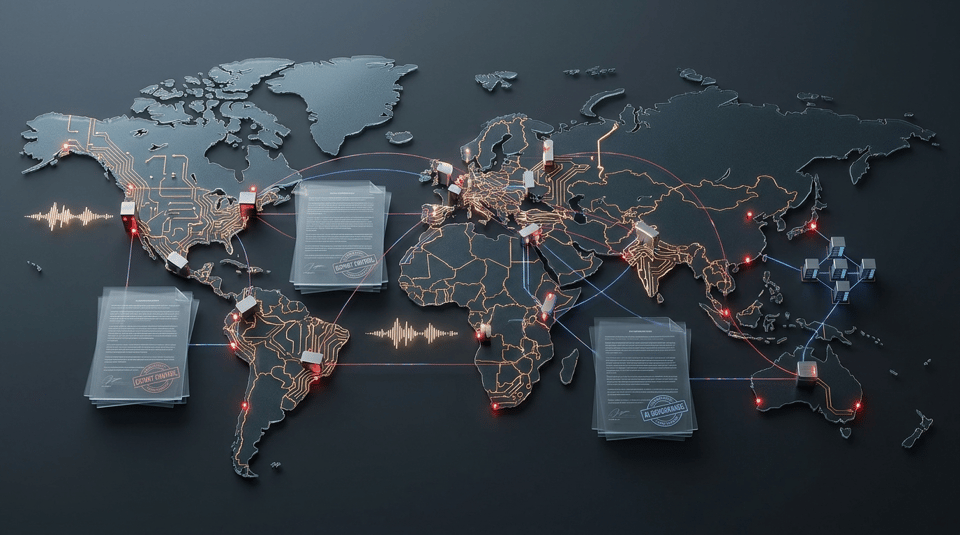
The U.S. policy story this cycle is not just export controls. Reuters reported that bipartisan U.S. senators planned legislation to counter Chinese sales of AI tools overseas [8]. That is a strategic broadening. Chips restrict supply. Tool-sales policy targets adoption, influence, and dependency in third markets.
This matters because AI systems are becoming embedded operating layers for governments and companies. If a foreign ministry, bank, telecom, or public-sector agency standardizes on a Chinese AI stack, the geopolitical dependency is not only model access. It includes data flows, support contracts, integrations, security assumptions, and local developer ecosystems.
The result is a more complicated AI trade map. The U.S. can restrict chips, subsidize domestic infrastructure, and still lose influence if deployable AI systems from China are cheaper, easier, or bundled with favorable financing. DeepSeek's permanent V4-Pro price cut belongs in that context [15]. Price is not just commercial pressure. It is geopolitical distribution strategy.
OpenAI's Public-Market Path Runs Through Governance Questions
Reuters reported that OpenAI is preparing to confidentially file for a U.S. IPO in the coming weeks [16]. Reuters also reported that a court document showed Sam Altman holds more than $2 billion in companies that have done business with OpenAI [17]. These are not the same story, but they will converge if OpenAI moves toward public markets.
A public OpenAI would face a different disclosure environment from a private lab. Compute commitments, partner conflicts, model-safety incidents, product liability, and executive investments would all receive more structured scrutiny. That does not mean an IPO is impossible. It means the governance layer has to become as legible as the product layer.
The broader signal is that frontier labs are becoming systemically important vendors while still carrying founder-era governance complexity. Public-market investors will not only ask whether the models are good. They will ask whether the company can explain who benefits from its deals, who bears its liabilities, and how it controls access to high-risk capabilities.
Copyright and Professional Liability Keep Expanding
AI liability continues to widen across data types and professional boundaries. Reuters reported that a U.S. judge considered Anthropic's $1.5 billion settlement in an authors lawsuit [18]. Reuters also reported that OpenAI asked a court to toss an insurer's unauthorized legal-advice lawsuit, arguing that ChatGPT is not a lawyer [19]. Separately, journalists sued Google over alleged use of their voices in AI training [20]. Five major publishers, including Elsevier, Hachette, and Macmillan, sued Meta for copyright infringement over AI training, opening a new front in the text-ingestion litigation [47]. Pennsylvania sued Character.AI, alleging the chatbot posed as doctors and dispensed medical advice, the first state enforcement action targeting AI health-claims fraud [48].
The pattern is visible across the docket. The litigation frontier is moving from text ingestion to voice identity, from consumer disappointment to professional reliance, and from abstract copyright arguments to concrete workflow harms. These cases do not all have the same legal strength, but they all pressure the same weak point: AI vendors want broad use, but courts are being asked to decide when use becomes responsibility.
US Government Moves Toward AI Model Testing
Reuters reported on May 5 that Microsoft, Google, and xAI agreed to give the US government early access to unreleased AI models for national security testing [49]. A companion explainer detailed the expanded NIST program and its implications [50]. By May 21, Reuters reported that President Trump was expected to sign an executive order on AI and cybersecurity, as pressure grew from parts of his own administration [51]. Details about the stress-test agreements were subsequently removed from the Commerce Department website [52].
This is the governance corollary to the AISI cyber-evaluation signal. The US government is building a pre-release testing framework for frontier models, initially voluntary but moving toward executive-order authority. The removal of published details suggests political sensitivity around how much oversight the industry will accept before it becomes a competitive constraint.
Release Breakdowns
Google Antigravity and Gemini CLI Transition
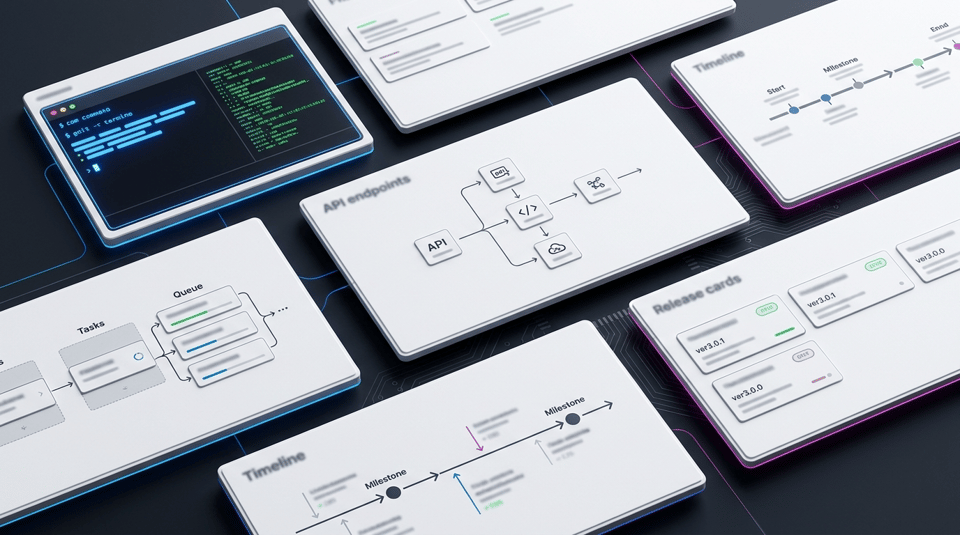
What it is: Google is transitioning Gemini CLI into Antigravity CLI, a Go-based, agent-first terminal tool that shares the same agent harness as Antigravity 2.0 [21].
What changed: Google says Antigravity CLI keeps critical Gemini CLI features such as Agent Skills, Hooks, Subagents, and Extensions, now reframed as Antigravity plugins. It adds faster execution, asynchronous workflows, and a unified architecture with the desktop agent platform [21].
Timeline: Antigravity CLI is available now. Gemini CLI and Gemini Code Assist IDE extensions stop serving requests for free, Pro, and Ultra users on June 18, 2026. Enterprise access remains unchanged under supported licenses [21].
What it means: Google is choosing platform coherence over tool sprawl. That will annoy some individual developers, but it gives enterprise and agent-platform teams one primary surface to harden.
GitHub Makes Cloud Agents Programmable
What it is: GitHub introduced a REST API for starting Copilot cloud-agent tasks for Copilot Business and Copilot Enterprise users in public preview [6]. A later changelog added programmatic auditing for repository Copilot cloud-agent configuration [22].
What changed: Cloud-agent work can now be started and managed programmatically rather than only through UI flows [6].
Who should care: Platform engineering teams that want to route bug fixes, refactors, test creation, dependency updates, or repository maintenance into agent queues.
What it means: Coding agents are becoming schedulable infrastructure. Once an API exists, agents can be embedded into CI, ticketing, incident response, and internal developer platforms.
SAP Business AI Platform
What it is: SAP's Business AI Platform and autonomous-enterprise push position Joule and related tools as governed agents across finance, HR, procurement, supply chain, and customer operations [4].
What changed: SAP is not selling a generic assistant. It is embedding agents into enterprise process layers where SAP already has data gravity [4].
What it means: Incumbent software companies have a strong distribution advantage in enterprise AI. They already own workflow context, permissions, and executive budget lines.
Anthropic Acquires Stainless and xAI Ships Grok Build
What it is: Anthropic acquired Stainless, the SDK-generator startup used by OpenAI, Google, and Cloudflare, for over $300 million [38]. Separately, xAI entered the coding-agent market with Grok Build, its first AI coding agent featuring Arena Mode and a local-first design [40].
What changed: Anthropic shut down Stainless' hosted SDK generator for external customers, forcing rivals to rebuild their API-integration toolchains [39]. Grok Build adds another competitor to the coding-agent space that already includes GitHub Copilot, OpenAI Codex, Google Antigravity, Cursor, and Windsurf.
What it means: The Stainless acquisition is a supply-chain move disguised as a developer-tools play. By removing a shared SDK layer used by competitors, Anthropic raises the integration cost for rival ecosystems. Grok Build's entry confirms that coding agents are now the table-stakes product for every major AI lab.
Google Courts Enterprise with Cheaper Gemini at I/O
What it is: Reuters reported that Google used I/O to put AI agents directly into its search box and rolled out a faster, cheaper version of Gemini aimed at enterprises [53].
What changed: The pricing and deployment model for Gemini now explicitly targets cost-sensitive enterprise buyers, not just the consumer and developer segments that dominated prior I/O announcements.
What it means: Google is competing on unit economics as much as capability. The cheaper Gemini variant, combined with the Blackstone TPU venture, signals that Google intends to own both the model layer and the infrastructure-cost layer for enterprise AI.
Implementation Resources
Start With the Agent Control Surface, Not the Model
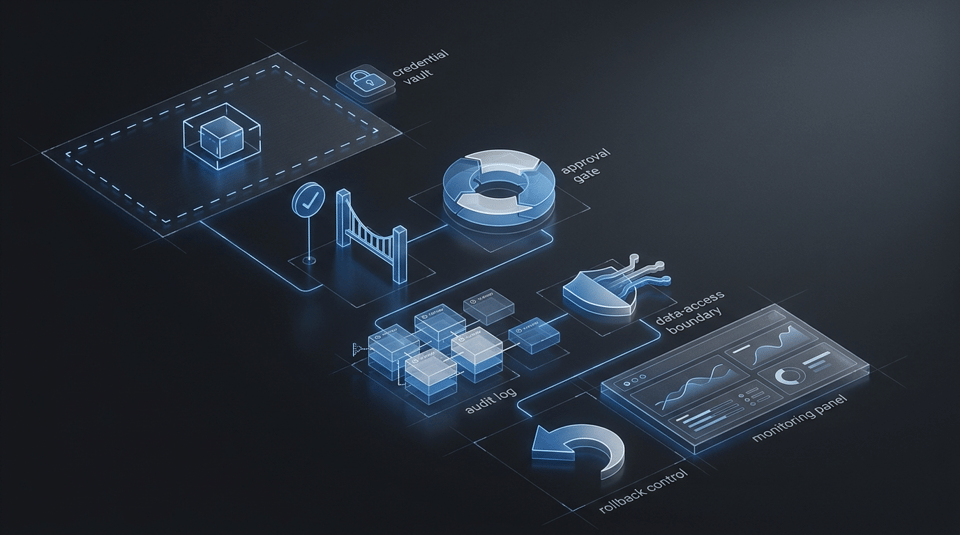
The best implementation resources this cycle are not just SDKs. They are control-surface signals. Google's developer keynote emphasizes terminal sandboxing, credential masking, hardened Git policies, managed agents with remote sandboxes, WebMCP, Chrome DevTools for agents, and Android agent skills [12]. GitHub's agent-task APIs make cloud-agent work programmable [6]. Dell's AI ecosystem push emphasizes on-prem and hybrid control for enterprise AI models [3].
For implementation teams, the checklist should change:
- Where does the agent execute?
- What data can it read?
- What credentials can it touch?
- What actions can it perform without approval?
- What evidence does it leave for audit?
- How does the organization revoke, replay, or override its work?
If a tool cannot answer those questions, it should stay in pilot. If it can, it may be ready to enter the platform stack.
Treat Migration Timelines as Operational Risk
Google's Gemini CLI transition is a reminder that agent tools now have lifecycle risk [21]. Individual and free users face a June 18 cutoff, while enterprise users retain supported access. That distinction matters. Teams that build internal workflows around fast-moving AI tools need a migration register, not just a list of favorite CLIs.
The practical response is concrete: inventory agent tools, record authentication method, hosting location, data access, pricing model, retirement policy, and replacement path. The same process should apply to model APIs, IDE extensions, browser agents, coding agents, and managed sandboxes.
Use Community Channels as Signal, Not Proof
Reddit and LinkedIn showed visible practitioner attention around Google Antigravity, Gemini 3.5, and agent migration after I/O. That is useful as demand-side context, but it is not reliable enough for claim support. In this issue, community channels were used only to identify what builders were reacting to, then every factual claim was tied back to Google, DeepMind, GitHub, Dell, SAP, Microsoft, AISI, or Reuters.
That should remain the standard. Social platforms are early-warning radar. They are not the citation layer.
Performance and Benchmarks

AISI's Cyber Time Horizons Are Outgrowing the Test Suite
AISI's May 13 post is the most important evaluation source of the cycle. It estimates that the length of cyber tasks frontier models can autonomously complete has been doubling every few months, with the trend accelerating from an earlier eight-month estimate to 4.7 months in February 2026 [7]. AISI also said Claude Mythos Preview and GPT-5.5 substantially exceeded both prior trends [7].
The details matter. AISI focuses on an 80% reliability cyber time horizon under a narrow cyber suite and a 2.5M token cap. The cap is deliberately constraining; without it, success rates for recent models become so high that time horizons are difficult to calculate [7]. AISI also notes that the longest tasks have limited human baselines and that the suite is not a complete measure of real-world attacks [7].
The conclusion is not that a benchmark perfectly predicts offensive capability. It is that the measurement apparatus is being stretched by the models. When evaluations need artificial token caps and still run into ceiling effects, governance cannot wait for perfect benchmarks.
Model Cards Are Becoming Procurement Inputs
The Gemini 3.5 Flash and Gemini Omni Flash model cards are a reminder that model documentation is no longer just research hygiene [13][14]. As agents move into transaction, code, browser, enterprise, and mobile workflows, buyers should treat model cards as procurement evidence. They should ask what the model can do, where it fails, what mitigations exist, and whether those mitigations survive when the model is embedded in a tool chain.
This is especially important for multimodal and action-oriented models. The evaluation question is not only benchmark score. It is whether the model behaves predictably when connected to tools, state, user memory, files, repositories, calendars, shopping carts, or business systems.
Benchmarks Are Becoming Time-Sensitive
DeepSeek's permanent V4-Pro price cut is a performance story as much as a business story [15]. If a capable model resets price expectations by 75%, stale benchmark comparisons become less useful. The buying question becomes quality per dollar, latency per dollar, tool reliability per dollar, and governance per dollar.
The practical implication for teams is to shorten benchmark refresh cycles. A quarterly model bakeoff is too slow in a market where price, context, speed, and agent scaffolding can change in weeks. Teams should maintain small, domain-specific evals that can be rerun whenever a model, price sheet, or agent runtime changes.
Closing Takeaway
The agent era is becoming less magical and more operational. That is a good thing. Magic demos do not survive procurement, regulation, cyber risk, worker displacement, or power constraints. Operational systems sometimes do.
The winners in this cycle are not simply the labs with the most capable models. They are the platforms that can make agents useful inside bounded environments: Google's Antigravity and browser-agent stack, GitHub's programmable cloud agents, OpenAI and Dell's hybrid Codex deployment path, SAP and Microsoft's governed enterprise workflows, and AISI's increasingly urgent evaluation work.
The warning is equally direct. Once agents become infrastructure, every unresolved weakness becomes infrastructure risk. A vague model card becomes procurement risk. A rushed workforce message becomes regulator risk. A cheap model becomes geopolitical distribution risk. A data center becomes a utility-rate case. A coding assistant becomes an access-control problem.
The next phase of AI competition will be won by organizations that can answer one question better than their competitors: what exactly is this agent allowed to do, and how do we know?
References
- Google. “100 things we announced at I/O 2026.” https://blog.google/innovation-and-ai/technology/ai/google-io-2026-all-our-announcements/. Accessed 2026-05-25.
- OpenAI. “OpenAI and Dell Technologies partner to bring Codex to hybrid and on-premise environments.” https://openai.com/index/dell-codex-enterprise-partnership/. Accessed 2026-05-25.
- Dell Technologies. “Choice Without Compromise: Inside Dell’s Expanding AI Ecosystem.” https://www.dell.com/en-us/blog/choice-without-compromise-inside-dells-expanding-ai-ecosystem/. Accessed 2026-05-25.
- SAP News Center. “SAP Unveils Business AI Platform to Power the Autonomous Enterprise.” https://news.sap.com/2026/05/sap-sapphire-keynote-business-ai-platform-power-autonomous-enterprise/. Accessed 2026-05-25.
- Microsoft Azure Blog. “Advancing enterprise AI: New SAP on Azure announcements from SAP Sapphire 2026.” https://azure.microsoft.com/en-us/blog/advancing-enterprise-ai-new-sap-on-azure-announcements-from-sap-sapphire-2026/. Accessed 2026-05-25.
- GitHub Docs. “REST API endpoints for agent tasks.” https://docs.github.com/en/rest/agent-tasks/agent-tasks. Accessed 2026-05-25.
- AI Security Institute. “How fast is autonomous AI cyber capability advancing?” https://www.aisi.gov.uk/blog/how-fast-is-autonomous-ai-cyber-capability-advancing. Accessed 2026-05-25.
- Reuters. “US lawmakers seek to undercut Chinese AI and tech sales abroad.” https://www.reuters.com/legal/government/us-lawmakers-seek-undercut-chinese-ai-tech-sales-abroad-2026-05-19/. Accessed 2026-05-25.
- Reuters. “Giant US power merger bets on AI build-out, but may hinge on power bills.” https://www.reuters.com/legal/litigation/giant-us-power-merger-bets-ai-build-out-may-hinge-power-bills-2026-05-20/. Accessed 2026-05-25.
- Reuters. “Don’t fight AI, HSBC CEO tells staff as banks begin job cuts.” https://www.reuters.com/legal/legalindustry/dont-fight-ai-hsbc-ceo-tells-staff-banks-begin-job-cuts-2026-05-20/. Accessed 2026-05-25.
- Reuters. “StanChart CEO apologises for ‘upset caused’ by AI comments.” https://www.reuters.com/legal/legalindustry/stanchart-ceo-apologises-upset-caused-by-ai-comments-2026-05-22/. Accessed 2026-05-25.
- Google Developers Blog. “All the news from the Google I/O 2026 Developer keynote.” https://developers.googleblog.com/all-the-news-from-the-google-io-2026-developer-keynote/. Accessed 2026-05-25.
- Google DeepMind. “Gemini 3.5 Flash - Model Card.” https://deepmind.google/models/model-cards/gemini-3-5-flash/. Accessed 2026-05-25.
- Google DeepMind. “Gemini Omni Flash - Model Card.” https://deepmind.google/models/model-cards/gemini-omni-flash/. Accessed 2026-05-25.
- Reuters. “China’s DeepSeek to make permanent 75% price cut on flagship V4-Pro AI model.” https://www.reuters.com/world/china/chinas-deepseek-make-permanent-75-price-cut-flagship-v4pro-ai-model-2026-05-23/. Accessed 2026-05-25.
- Reuters. “OpenAI aiming for speedy IPO, source says.” https://www.reuters.com/business/openai-preparing-file-ipo-soon-wsj-reports-2026-05-20/. Accessed 2026-05-25.
- Reuters. “OpenAI chief Altman has over $2 billion stake in companies that dealt with OpenAI, court filing shows.” https://www.reuters.com/legal/government/openai-chief-altman-has-over-2-billion-stake-companies-that-dealt-with-openai-2026-05-13/. Accessed 2026-05-25.
- Reuters. “US judge considers Anthropic’s $1.5 billion settlement in authors lawsuit.” https://www.reuters.com/legal/government/us-judge-considers-anthropics-15-billion-settlement-authors-lawsuit-2026-05-14/. Accessed 2026-05-25.
- Reuters. “OpenAI says ChatGPT is not a lawyer, asks court to toss insurer’s lawsuit.” https://www.reuters.com/legal/transactional/openai-says-chatgpt-is-not-lawyer-asks-court-toss-insurers-lawsuit-2026-05-18/. Accessed 2026-05-25.
- PYMNTS. “Award-Winning Journalists and Narrators Sue Google Over Alleged Voice AI Training.” https://www.pymnts.com/cpi-posts/award-winning-journalists-and-narrators-sue-google-over-alleged-voice-ai-training/. Accessed 2026-05-25.
- Google Developers Blog. “An important update: Transitioning Gemini CLI to Antigravity CLI.” https://developers.googleblog.com/an-important-update-transitioning-gemini-cli-to-antigravity-cli/. Accessed 2026-05-25.
- GitHub Changelog. “Audit repository Copilot cloud agent configuration via the REST API.” https://github.blog/changelog/2026-05-18-audit-repository-copilot-cloud-agent-configuration-via-the-rest-api/. Accessed 2026-05-25.
- Reuters. “Cerebras shares skyrocket in debut as AI mania grips markets.” https://www.reuters.com/legal/transactional/cerebras-set-debut-stock-market-gripped-by-ai-mania-2026-05-14/. Accessed 2026-05-25.
- Reuters. “Cerebras to raise IPO price range to $150-$160 as demand surges, sources say.” https://www.reuters.com/legal/transactional/cerebras-raise-ipo-price-range-150-160-demand-surges-sources-say-2026-05-10/. Accessed 2026-05-25.
- Cerebras Systems. “Cerebras Systems Announces Pricing of Initial Public Offering.” https://www.cerebras.ai/press-release/cerebras-systems-announces-pricing-of-initial-public-offering. Accessed 2026-05-25.
- Reuters. “Cerebras targets $26.6 billion valuation in US IPO as AI chip demand surges.” https://www.reuters.com/business/ai-chipmaker-cerebras-targets-115-125-share-price-us-ipo-source-says-2026-05-04/. Accessed 2026-05-25.
- Reuters. “Google, Blackstone to launch AI cloud venture to meet data centre demand.” https://www.reuters.com/business/google-blackstone-create-new-ai-cloud-company-wsj-reports-2026-05-19/. Accessed 2026-05-25.
- CNBC. “Blackstone to invest $5 billion in AI infrastructure venture with Google.” https://www.cnbc.com/2026/05/19/blackstone-google-ai-data-center-joint-venture.html. Accessed 2026-05-25.
- Reuters. “Blackstone data center vehicle makes muted debut after $1.75 billion IPO.” https://www.reuters.com/technology/blackstone-data-center-vehicle-opens-flat-new-york-debut-after-175-billion-ipo-2026-05-14/. Accessed 2026-05-25.
- Reuters Breakingviews. “IPO trio unleashes undiscerning AI zeal.” https://www.reuters.com/commentary/breakingviews/ipo-trio-unleashes-undiscerning-ai-zeal-2026-05-12/. Accessed 2026-05-25.
- Reuters. “Broadcom signs long-term deal to develop Google’s custom AI chips.” https://www.reuters.com/business/broadcom-signs-long-term-deal-develop-googles-custom-ai-chips-2026-04-06/. Accessed 2026-05-25.
- Reuters. “OpenAI creates new unit with $4 billion investment to aid corporate AI push.” https://www.reuters.com/business/openai-creates-new-unit-with-4-billion-investment-aid-corporate-ai-push-2026-05-11/. Accessed 2026-05-25.
- Reuters. “OpenAI, Anthropic ventures in talks to buy AI services firms, sources say.” https://www.reuters.com/world/openai-anthropic-ventures-talks-buy-ai-services-firms-sources-say-2026-05-05/. Accessed 2026-05-25.
- Anthropic. “Building a new enterprise AI services company with Blackstone, Hellman & Friedman, and Goldman Sachs.” https://www.anthropic.com/news/enterprise-ai-services-company. Accessed 2026-05-25.
- CIO.com. “OpenAI, Anthropic expand services push, signaling new phase in enterprise AI race.” https://www.cio.com/article/4167787/openai-anthropic-expand-services-push-signaling-new-phase-in-enterprise-ai-race.html. Accessed 2026-05-25.
- Ramp. “Anthropic beats OpenAI on business adoption.” https://ramp.com/leading-indicators/ai-index-may-2026. Accessed 2026-05-25.
- CNBC. “2026 CNBC Disruptor 50: See the full list of companies, rankings, and a new leader in the AI race.” https://www.cnbc.com/2026/05/19/2026-cnbc-disruptor-50-rankings.html. Accessed 2026-05-25.
- TechCrunch. “Anthropic has acquired the dev tools startup used by OpenAI, Google, and Cloudflare.” https://techcrunch.com/2026/05/18/anthropic-has-acquired-the-dev-tools-startup-used-by-openai-google-and-cloudflare/. Accessed 2026-05-25.
- Forbes. “Anthropic Buys Stainless To Cut Off OpenAI And Google SDK Access.” https://www.forbes.com/sites/sandycarter/2026/05/18/anthropic-buys-stainless-to-cut-off-openai-and-google-sdk-access/. Accessed 2026-05-25.
- xAI. “Introducing Grok Build.” https://x.ai/news/grok-build-cli. Accessed 2026-05-25.
- Reuters. “Companies cutting jobs as investments shift toward AI.” https://www.reuters.com/business/world-at-work/companies-cutting-jobs-investments-shift-toward-ai-2026-05-21/. Accessed 2026-05-25.
- Reuters. “StanChart to cut over 7,000 jobs, boost AI to replace ‘lower-value human capital’.” https://www.reuters.com/business/world-at-work/stanchart-cut-more-than-7000-jobs-bank-steps-up-ai-adoption-2026-05-19/. Accessed 2026-05-25.
- Reuters. “Regulators question StanChart following CEO Winters’ AI comments amid job cuts, Bloomberg News reports.” https://www.reuters.com/business/finance/regulators-question-stanchart-following-ceo-winters-ai-comments-amid-job-cuts-2026-05-21/. Accessed 2026-05-25.
- Reuters. “Intuit to cut 17% of global jobs to streamline operations, memo shows.” https://www.reuters.com/business/world-at-work/intuit-cut-17-global-jobs-streamline-operations-memo-shows-2026-05-20/. Accessed 2026-05-25.
- Reuters. “Meta lays out details of May 20 restructuring in internal document, sources say.” https://www.reuters.com/world/meta-lays-out-plans-may-20-layoffs-restructuring-internal-document-says-2026-05-18/. Accessed 2026-05-25.
- Reuters. “StanChart CEO seeks to reassure staff over ‘lower value human capital’ comment.” https://www.reuters.com/legal/legalindustry/stanchart-ceo-seeks-reassure-staff-over-ai-linked-job-cuts-2026-05-20/. Accessed 2026-05-25.
- Hachette Book Group. “Publishers and Authors File Class Action Lawsuit Against Meta and Zuckerberg for Willful Copyright Infringement to Develop Llama AI Models.” https://www.hachettebookgroup.com/articles/publishers-and-authors-file-class-action-lawsuit-against-meta-and-zuckerberg-for-willful-copyright-infringement-to-develop-llama-ai-models/. Accessed 2026-05-25.
- TechCrunch. “Pennsylvania sues Character.AI after a chatbot allegedly posed as a doctor.” https://techcrunch.com/2026/05/05/pennsylvania-sues-character-ai-after-a-chatbot-allegedly-posed-as-a-doctor/. Accessed 2026-05-25.
- Reuters. “Microsoft, Google and xAI to give US government early access to AI models.” https://www.reuters.com/legal/litigation/microsoft-xai-google-will-share-ai-models-with-us-govt-security-reviews-2026-05-05/. Accessed 2026-05-25.
- Reuters. “What we know about US stress tests of Google, xAI and Microsoft AI models.” https://www.reuters.com/legal/litigation/what-we-know-about-us-stress-tests-google-xai-microsoft-ai-models-2026-05-05/. Accessed 2026-05-25.
- Reuters. “Trump to sign order on AI oversight as security fears mount among supporters.” https://www.reuters.com/legal/litigation/trump-sign-order-ai-oversight-security-fears-mount-among-supporters-2026-05-20/. Accessed 2026-05-25.
- Reuters. “Microsoft, Google, xAI security test details deleted from US government website.” https://www.reuters.com/legal/litigation/microsoft-google-xai-security-test-details-deleted-us-government-website-2026-05-11/. Accessed 2026-05-25.
- Reuters. “Google courts coders and consumers at I/O, touts cheaper AI model for enterprises.” https://www.reuters.com/business/google-expected-court-coders-consumers-io-conference-2026-05-19/. Accessed 2026-05-25.
Liked this issue? Forward it to a colleague who needs to stay ahead.
Subscribe to The MediaDataFusion Signal