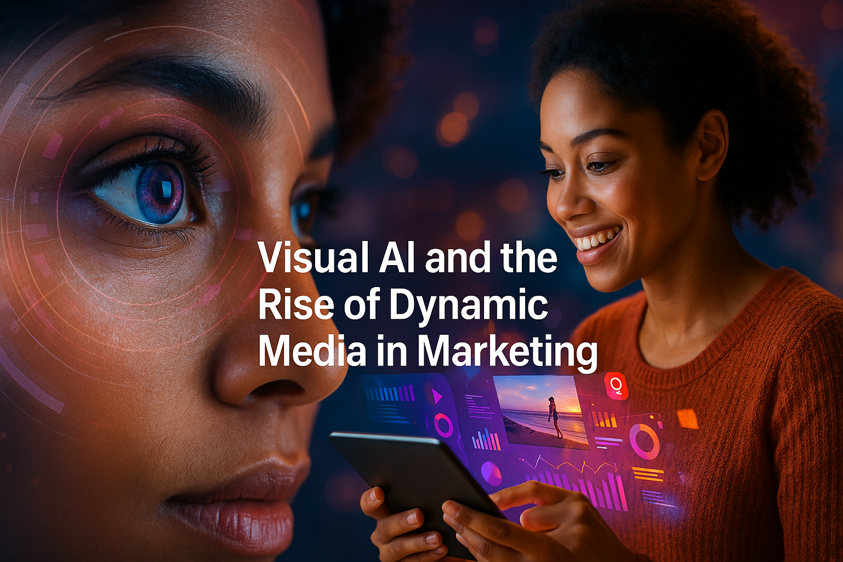
Visual AI and the Rise of Dynamic Media in Marketing
A single marketing image that transforms itself for each viewer. Video content that adapts its message based on who’s watching. Creative assets that evolve in real-time based on performance data. This isn’t science fiction—it’s the reality of Visual AI in 2025, and it’s revolutionizing how brands connect with audiences.
The Visual Revolution We Didn’t See Coming
While everyone was focused on chatbots and text generation, Visual AI quietly transformed from an experimental technology into a marketing powerhouse. Today’s Visual AI doesn’t just analyze images—it creates, adapts, and optimizes visual content at a scale and speed that would have required entire creative departments just years ago.
The implications are staggering. Marketing teams are producing thousands of personalized creative variations daily. Brands are testing visual concepts in real-time, pivoting campaigns mid-flight based on AI-driven insights. Most remarkably, they’re doing this with smaller teams and bigger impact than ever before.
Understanding Visual AI in Marketing Context
Beyond Filters and Effects
Visual AI in marketing goes far beyond simple image manipulation. Today’s systems understand:
- Context and Meaning: AI recognizes not just objects, but emotions, situations, and cultural nuances
- Brand Identity: Systems learn and maintain brand guidelines while exploring creative boundaries
- Audience Psychology: Visual elements are selected based on deep understanding of viewer preferences
- Performance Patterns: AI identifies which visual elements drive engagement and conversions
The Technology Stack
Modern Visual AI marketing platforms combine multiple technologies:
- Generative AI: Creates original images, videos, and animations
- Computer Vision: Analyzes and understands visual content
- Machine Learning: Continuously improves based on performance data
- Real-Time Processing: Enables dynamic content adaptation
Game-Changing Applications
Dynamic Product Photography
E-commerce has been transformed by AI that generates product images in infinite contexts. One product photo becomes thousands—shown in different settings, angles, and styles based on viewer preferences. A furniture retailer might show the same sofa in a minimalist loft to one customer and a cozy cottage to another, all generated dynamically.
Personalized Video Marketing
Video content now adapts in real-time. The same base video might:
- Change background scenes based on viewer location
- Adjust product colors to match known preferences
- Modify calls-to-action based on funnel stage
- Alter pacing based on engagement patterns
Intelligent Creative Testing
Traditional A/B testing compared two versions. Visual AI tests thousands simultaneously, learning which combinations of colors, layouts, typography, and imagery resonate with specific segments. The system continuously evolves creative based on performance, optimizing campaigns automatically.
Real-Time Content Generation
Social media managers now respond to trends instantly. Visual AI generates relevant, on-brand content for trending topics in minutes, not days. This agility allows brands to join conversations while they’re still relevant.
The Psychology of Dynamic Visual Content
Attention in the Age of Overload
Humans process visual information 60,000 times faster than text. In an attention economy, Visual AI ensures every millisecond counts by:
- Optimizing for quick comprehension
- Using colors and compositions proven to grab attention
- Adapting complexity based on viewing context
Emotional Resonance
Visual AI analyzes successful content to understand emotional triggers:
- Which facial expressions drive empathy
- How color psychology varies across cultures
- What visual metaphors resonate with different demographics
The Personalization Paradox
While consumers crave personalized experiences, they’re also privacy-conscious. Visual AI threads this needle by personalizing based on behavior patterns rather than personal data, creating relevance without invasiveness.
Implementation Strategies
Start with Clear Objectives
Before deploying Visual AI, define success:
- Increased engagement rates?
- Higher conversion rates?
- Reduced creative production costs?
- Faster time-to-market?
Build a Visual Asset Library
AI needs raw materials. Develop:
- High-quality product photography from multiple angles
- Brand elements (logos, colors, fonts)
- Approved imagery and video clips
- Performance data from past campaigns
Establish Brand Guidelines for AI
Create AI-specific brand rules:
- Acceptable color variations
- Logo usage parameters
- Tone and mood boundaries
- Cultural sensitivity requirements
Test, Learn, and Scale
Begin with low-risk implementations:
- Start with social media content
- Expand to email marketing visuals
- Graduate to dynamic website content
- Finally, implement in paid advertising
Measuring Visual AI Impact
Quantitative Metrics
Track traditional metrics with new precision:
- Engagement Rate by Visual Element: Which specific elements drive interaction
- Conversion Attribution: How visual changes impact purchase decisions
- Creative Efficiency: Cost per effective creative variant
- Speed to Market: Time from concept to deployment
Qualitative Insights
AI provides unprecedented understanding:
- Sentiment Analysis: How visuals impact brand perception
- Attention Mapping: Where viewers look and for how long
- Emotional Response: Predicted emotional impact of visual elements
- Cultural Resonance: How visuals perform across different markets
Overcoming Common Challenges
Maintaining Authenticity
The ease of AI generation can lead to over-production. Solution: Use AI to enhance human creativity, not replace it. The best campaigns combine AI efficiency with human insight and emotion.
Technical Integration
Visual AI requires robust technical infrastructure. Solution: Start with cloud-based platforms that integrate with existing marketing tools. Build technical capabilities gradually.
Team Adaptation
Creative teams may resist AI adoption. Solution: Position AI as a collaborator that handles repetitive tasks, freeing creatives for strategic work. Provide training that emphasizes AI as a tool, not a replacement.
Quality Control
AI can produce off-brand or inappropriate content. Solution: Implement approval workflows, regular audits, and continuous training of AI systems with feedback loops.
Industry-Specific Applications
Retail and E-commerce
- Virtual try-on experiences
- Dynamic product catalogs
- Personalized store layouts
- Automated promotional materials
Travel and Hospitality
- Destination marketing that adapts to viewer interests
- Dynamic pricing visualizations
- Personalized travel itineraries with visual guides
- Real-time weather-based campaign adjustments
Real Estate
- Virtual staging that matches buyer preferences
- Dynamic property tours
- Neighborhood visualizations based on buyer priorities
- Automated listing enhancements
B2B Marketing
- Personalized case study visuals
- Dynamic infographics that highlight relevant data
- Customized product demonstrations
- Industry-specific visual content
The Future of Visual AI in Marketing
Emerging Capabilities
The next wave of Visual AI will bring:
- 3D and AR Integration: Dynamic 3D product models and AR experiences
- Voice-Responsive Visuals: Content that adapts to voice commands
- Biometric Optimization: Visuals that adjust based on viewer’s emotional state
- Cross-Reality Campaigns: Seamless experiences across physical and digital
Ethical Considerations
As Visual AI becomes more powerful, marketers must consider:
- Transparency about AI-generated content
- Avoiding manipulative personalization
- Ensuring diverse representation in AI training data
- Protecting viewer privacy while personalizing
Competitive Implications
Brands that master Visual AI will enjoy:
- Dramatically lower creative costs
- Faster campaign deployment
- Higher engagement rates
- Better ROI on marketing spend
Those that don’t risk being outpaced by more agile competitors who can test, learn, and adapt at AI speed.
Getting Started with Visual AI
Essential First Steps
- Audit Current Visual Assets: Catalog existing materials and identify gaps
- Define Use Cases: Prioritize applications with highest potential impact
- Choose Platform Partners: Select Visual AI tools that integrate with your stack
- Pilot Program: Launch small-scale test with clear success metrics
- Scale Gradually: Expand based on proven results
Building Internal Capabilities
Invest in your team’s Visual AI literacy:
- Technical training for marketing operations
- Creative workshops on AI collaboration
- Leadership education on strategic implications
- Cross-functional alignment sessions
The Creative Renaissance
Paradoxically, Visual AI isn’t diminishing creativity—it’s amplifying it. By handling production and optimization, AI frees creative minds to focus on strategy, storytelling, and breakthrough ideas. The result is a renaissance in marketing creativity, powered by the perfect partnership of human imagination and machine capability.
Take Action Today
The Visual AI revolution in marketing is accelerating. Early adopters are already seeing transformative results—higher engagement, lower costs, and unprecedented agility. The question isn’t whether to adopt Visual AI, but how quickly you can integrate it into your marketing strategy.
At MediaDataFusion, we’re pioneering the integration of Visual AI into comprehensive marketing platforms. Our tools don’t just generate visuals—they understand your brand, learn from your audience, and continuously optimize for maximum impact.
Don’t let your competition capture attention while you’re still creating static content. Embrace the dynamic future of marketing with Visual AI. The brands that win tomorrow are investing in these capabilities today.
Ready to transform your visual marketing? Let’s explore how Visual AI can revolutionize your creative process and multiply your marketing impact.