Self-Sufficiency Is the Strategy
Seven days in late May and early June 2026 broke the AI industry's alliance structure. Anthropic raised $65 billion at a $965 billion valuation and confirmed its most powerful model would go public. Microsoft launched seven in-house AI models, ending its reseller posture with OpenAI. OpenAI went multi-cloud on AWS while building a $4 billion consulting arm. NVIDIA released open models, a consumer PC, and a physical-AI platform — competing with the customers who buy its chips. SpaceX filed for the largest IPO in history, revealing that its AI division pays Anthropic $1.5 billion a year for compute. And the US government chose voluntary coordination over mandatory regulation.
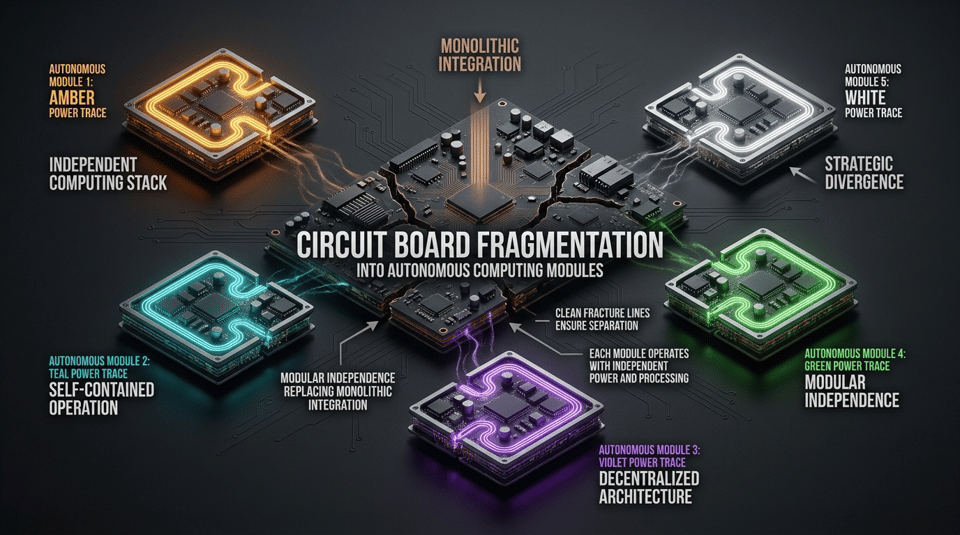
In one week, every major AI player broke a key dependency and built the missing piece itself. The partnerships that defined the AI industry for three years — Microsoft and OpenAI, OpenAI and Azure, labs and cloud providers, even governments and regulators — are being replaced by vertical integration. Self-sufficiency, not partnership, is now the primary competitive strategy.
Technology Signals
Opus 4.8 Takes the Coding Lead
Anthropic released Claude Opus 4.8 on May 28, posting 69.2% on SWE-bench Pro — a 10.6-point lead over GPT-5.5 and the largest gap any model has held on that benchmark [1]. The release introduced Dynamic Workflows for multi-step agent orchestration and effort control for adjustable compute per task, at $5 input and $25 output per million tokens [1]. Fast mode delivers 2.5x the speed at 3x lower cost [1].
Most significantly, Anthropic confirmed that "Mythos-class models" — its restricted, security-focused system currently available only through the Glasswing program — would be available to all customers "in the coming weeks" [2]. GPT-5.5 Instant, released May 5 as ChatGPT's default model, brought reduced hallucinations and improved personalization to billions of users [48][49]. Forbes reported Mythos is "headed for wider release" [3], and TestingCatalog identified a new "Oceanus" checkpoint undergoing red teaming [4]. Mythos moving from restricted to public would create a three-way contest with GPT-5.5 and Gemini 3.5 Pro for the most capable publicly available model.
Microsoft Builds Its Own AI Stack
At Build 2026 on June 2, Microsoft AI CEO Mustafa Suleyman launched seven in-house MAI models spanning reasoning, coding, image, voice, and transcription — the clearest break yet from Microsoft's $13 billion OpenAI partnership [5]. The family includes MAI-Thinking-1, a flagship reasoning model that Microsoft claims matches leading models on SWE-bench [5]. MAI-Code-1-Flash has 5 billion active parameters [5]. An Excel-tuned variant claims 10x efficiency over GPT-5.4 at equivalent tasks, though Microsoft concedes this needs independent verification [5].
Microsoft also launched Frontier Tuning, a platform that lets enterprises customize MAI models without building from scratch, running on Microsoft's own Maia 200 silicon at a claimed 1.4x efficiency gain [5]. The models are distributed through OpenRouter, Fireworks, and Baseten — channels that do not include OpenAI [5]. Microsoft stated no third-party model distillation was involved [5]. This is Microsoft choosing self-sufficiency over rental.
NVIDIA's Full-Stack Platform Play
Jensen Huang's Computex/GTC Taipei keynote on June 1 was not a product launch — it was a declaration. NVIDIA announced Nemotron 3 Ultra, a 550-billion-parameter open-weights model (55 billion active) with 1-million-token context and claimed up to 5.9x throughput advantage, making it NVIDIA's most intelligent open model [6]. Cosmos 3, the first open physical-AI omnimodel, handles five modalities — text, image, video, ambient audio, and robot action sequences — in a single mixture-of-transformers system [7]. It ranks first among open models on robotics, smart-space, and driving benchmarks [7].
The RTX Spark consumer platform combines an Arm-based CPU with a Blackwell GPU and 128 GB of unified memory, positioning NVIDIA directly against Apple, Qualcomm, and Intel in the AI PC market [8]. The Vera Rubin AI factory platform, now in full production with seven chips including the VR200 GPU (336 billion transistors, 288 GB HBM4), is set for hyperscaler deployment in the second half of 2026 [9]. NVIDIA also released Nemotron 3.5 Content Safety, a 4-billion-parameter open guardrail model fine-tuned from Gemma 3 4B IT [10], and open-source physical AI agent tools and skills for robotics and autonomous vehicles [42]. Intel announced rackscale AI infrastructure with SambaNova at Computex [43], signaling that the infrastructure competition extends beyond NVIDIA.
When a company with dominant market share in AI accelerators builds its own open models, consumer PCs, and physical-AI platforms, it is no longer diversifying. It is competing with its own customers.
MiniMax M3: Chinese Open-Weight at the Frontier
MiniMax released M3 as open-weight on June 1, a 550-billion-parameter model with 1-million-token context using Multi-head Sparse Attention (MSA) architecture that reduces per-token compute at full context to one-twentieth of prior models [11]. M3 reports 59.0% on SWE-bench Pro and 66.0% on Terminal-Bench 2.1 [11]. A companion MiniMax Code agent and desktop computer operation capability round out the release [11].
M3's significance extends beyond benchmarks. The Stanford HAI AI Index 2026, released in April, found that the US-China frontier model gap has effectively closed [12]. M3 is evidence: a Chinese company releasing an open-weight model at near-frontier coding performance, with an architecture (MSA) that claims a genuine efficiency innovation.
Gemini 3.5 Pro Nears Launch
Google shipped Gemini 3.5 Flash at I/O on May 19, posting 76.2% on Terminal-Bench 2.1, 1,656 GDPval-AA Elo, and 83.6% on MCP Atlas — frontier performance at 4x the output speed of competitors [13]. CEO Sundar Pichai confirmed that Gemini 3.5 Pro, with a 2-million-token context window and Deep Think reasoning, is in internal use and will roll out in June [13]. As of June 8, Pro has not yet launched publicly.
Business Impact
Anthropic's $965 Billion Valuation
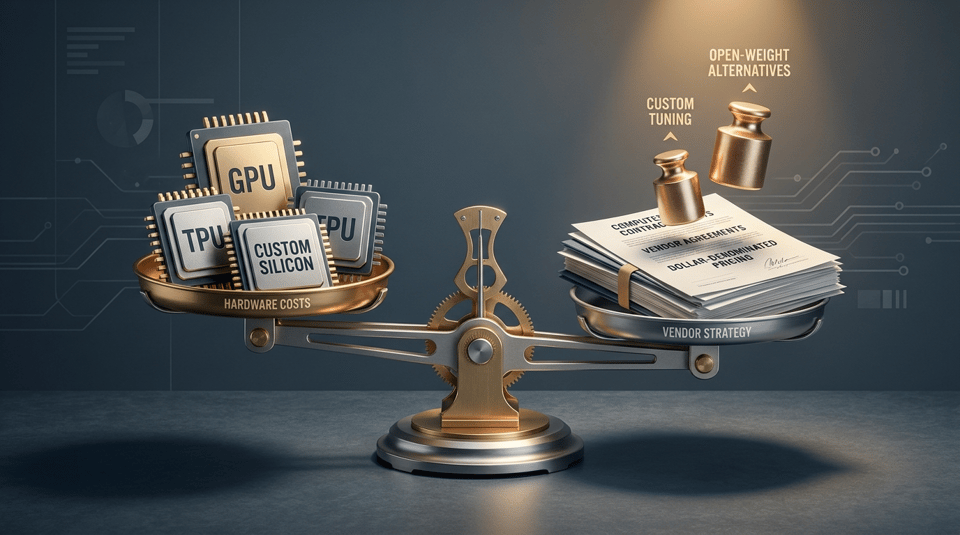
Anthropic closed a $65 billion Series H on May 28 at a $965 billion post-money valuation — the highest private valuation for any AI company [14]. The round included $15 billion from hyperscalers and $5 billion from Amazon [14]. Anthropic disclosed $47 billion in run-rate revenue and 5-gigawatt compute deals each with Amazon and Google [14]. Fortune reported the company has confidentially filed an S-1 for a public offering [15].
The SpaceX S-1 filing, discussed below, revealed an unexpected detail: SpaceX's AI division pays Anthropic $1.25 billion per month for compute — $15 billion annually [16]. Anthropic's revenue is partly funded by its own competitor's spending. This is vertical integration in reverse: Anthropic is not just building models, it is selling compute to companies building competing models.
SpaceX Files for the Largest IPO in History
SpaceX filed its S-1 on May 20, targeting a $1.75 trillion to $2 trillion valuation — the largest IPO in history [16][50]. The filing reveals $18.7 billion in revenue, $4.9 billion in net losses, Starlink at $11.4 billion (up 50% year over year), and xAI operations contributing a $20 billion capital expenditure drag and $6.4 billion in losses [16]. The IPO is set for June 12 on Nasdaq under ticker SPCX at a fixed $135 per share, raising $75 billion [17].
The S-1 also discloses SpaceX's option to acquire AI coding startup Cursor for $60 billion — or pay a $10 billion collaboration fee if it walks away [18][51]. Microsoft explored acquiring Cursor first but passed, according to AI Biz Insider [19]. The deal signals consolidation of the AI coding market: SpaceX, post-xAI merger, would own both the hardware (Colossus supercomputer) and the developer tooling (Cursor editor).
OpenAI Builds a Consulting Arm
On May 11, OpenAI launched the Deployment Company (DeployCo), a majority-owned subsidiary with $4 billion in committed investment from 19 outside investors led by TPG [20][53]. The unit acquired London AI consulting firm Tomoro, bringing 150 Forward Deployed Engineers [20]. Partners include McKinsey, Bain, and Capgemini — consulting firms that are simultaneously partnering with and competing against OpenAI's new deployment operation [20]. The unit is valued at approximately $14 billion with a 17.5% guaranteed return for investors [20].
OpenAI is no longer just an API provider. DeployCo places OpenAI engineers inside enterprise clients — a Palantir-style forward-deployed model that captures deployment revenue, not just inference calls. McKinsey co-investing in its own competition is a telling signal.
Cerebras Validates Non-GPU Inference
Cerebras Systems debuted on Nasdaq (CBRS) on May 14, pricing at $185 per share and opening at $350 — an 89% jump [21][44]. The stock closed at $311, up 68%, giving Cerebras a $95 billion market cap on the largest US tech IPO since Uber in 2019 [21]. Cerebras raised $5.55 billion selling 30 million shares [21]. Its wafer-scale engine architecture, which integrates an entire silicon wafer into a single processor, targets AI inference efficiency against traditional GPU architectures [21].
A $95 billion market cap for a company challenging NVIDIA's architecture paradigm signals that investors see room for non-GPU inference at scale.
The Chip Layer of AI Infrastructure
The Semiconductor Industry Association and Deloitte published a report quantifying the semiconductor foundation of AI infrastructure: chips constitute 95% of AI server rack value and over 50% of total AI data center capital expenditure [22]. The report projects $1.2 trillion in AI data center chip revenue by 2028 and $4 trillion in total AI data center infrastructure spending [22]. Every dollar spent on AI inference or training is more than half a dollar spent on chips.
Global Context

Trump Signs AI Executive Order: Voluntary Over Mandatory
President Trump signed "Promoting Advanced Artificial Intelligence Innovation and Security" on June 2, establishing a voluntary framework for government collaboration with AI companies on cybersecurity and frontier model assessment [23][36]. The order creates an AI cybersecurity clearinghouse for identifying and remediating software vulnerabilities at scale, directs federal agencies to deploy AI-enabled defensive tools for critical infrastructure, and establishes a classified benchmarking process for assessing frontier models' cyber capabilities [23][37][38][39].
Critically, the order expressly states that "nothing shall be construed to authorize creation of any mandatory governmental licensing, pre-clearance, or permitting requirement for the development, publication, release or distribution of AI models" [23]. The Attorney General is directed to prioritize enforcement against criminal AI use, and OMB and OPM are directed to expand federal AI cybersecurity hiring [24][40].
This is the United States choosing voluntary collaboration over mandatory regulation [36][52]. The order creates a path for the federal government to gain early access to frontier models for security assessment, but without forcing companies to submit. It is a deliberate strategic choice to keep AI development unencumbered — the opposite trajectory from the EU.
EU Delays High-Risk AI Compliance
On May 7, EU legislative bodies reached a provisional agreement to extend the high-risk AI system compliance deadline from August 2, 2026 to December 2, 2027, as part of the Digital Omnibus package [25]. The agreement, confirmed by Travers Smith [25], Latham & Watkins [26], and Hogan Lovells [27], also introduces targeted amendments to reduce regulatory overlap and adds new prohibitions. Formal adoption is still pending as of June 2026. Article 5 prohibited AI practices remain scheduled for December 2, 2026 [25].
The US and EU are now on opposite trajectories. The US signed a voluntary framework on June 2 while the EU is delaying mandatory compliance. Both signals point to the same conclusion: governments are struggling to regulate AI at the pace it is developing.
First Appellate Fair-Use Ruling on AI Training Data
The Third Circuit Court of Appeals has scheduled oral arguments for June 11 in Thomson Reuters Enterprise Centre GmbH v. Ross Intelligence Inc. — the first federal appellate case to address whether using copyrighted works to train an AI model qualifies as fair use [28]. The district court ruled in February 2025 that Ross's use of Thomson Reuters headnotes was not fair use, specifically because Ross created a competing product [29]. The Third Circuit accepted an interlocutory appeal in June 2025 [28].
The district court's ruling was limited to non-generative AI — Ross built a legal search tool, not a generative model [29]. But the appellate ruling, whatever it is, will set precedent for how courts analyze AI training data. Every frontier AI company that trains on copyrighted material is watching this case. Multiple law firms — DWT [29], Reed Smith [30], Jenner & Block [31], Debevoise [32] — have published analyses confirming the significance of the appeal.
Glasswing Expansion: Security at Scale
Anthropic expanded Project Glasswing to 150 organizations across 15 countries on June 2, targeting critical infrastructure in power, water, and transportation [33]. Partners have found over 10,000 security flaws [33]. The expansion accompanies Claude Security, a dedicated security product [33]. CNBC noted that Mythos "has raised concerns that new AI models will let hackers more easily exploit software" — precisely the concern the Trump executive order addresses [34].
Glasswing's expansion coincides with the executive order's focus on AI cybersecurity for critical infrastructure. Anthropic is aligning its commercial strategy with government priorities.
Release Breakdowns
Claude Opus 4.8
Provider: Anthropic | Date: May 28 | Type: Frontier proprietary
Key specs: 69.2% SWE-bench Pro, 1,890 GDPval-AA, $5/$25 per M tokens, Dynamic Workflows, effort control, fast mode at 2.5x speed and 3x cost reduction.
What changed: 10.6-point lead over GPT-5.5 on SWE-bench Pro. Dynamic Workflows for multi-step agent orchestration. Effort control for adjustable compute per task. Mythos-class models confirmed for public release "in coming weeks."
Why it matters: First model to widen the coding benchmark gap by double digits. Sets the frontier until Mythos arrives.
Microsoft MAI Model Family
Provider: Microsoft AI | Date: June 2 (Build 2026) | Type: Proprietary suite (7 models)
Key specs: MAI-Thinking-1 (reasoning), MAI-Code-1-Flash (5B active), MAI-Vision-1, MAI-Voice-2-Flash (coming soon), plus transcription. Frontier Tuning platform. Maia 200 silicon. Claims no third-party distillation.
What changed: Microsoft's most explicit break from OpenAI dependency. Seven models across five modalities.
Why it matters: Microsoft built frontier capability in-house, ending its pure-reseller posture.
NVIDIA Nemotron 3 Ultra + Cosmos 3
Provider: NVIDIA | Date: June 1 (Computex) | Type: Open-weight + open omnimodal
Key specs: Nemotron 3 Ultra: 550B/55B MoE, 1M context, up to 5.9x throughput. Cosmos 3: 5 modalities, #1 open model on robotics/driving benchmarks.
What changed: NVIDIA is now a model company. Cosmos 3 is the first open model that handles vision reasoning, world simulation, and action generation in one system.
Why it matters: The dominant AI chip company building its own open models is competing with its own customers.
MiniMax M3
Provider: MiniMax | Date: June 1 | Type: Open-weight frontier
Key specs: 550B params, 1M context, MSA at 1/20th compute, 59.0% SWE-bench Pro, 66.0% Terminal-Bench 2.1, MiniMax Code agent.
What changed: Chinese open-weight at near-frontier coding benchmarks with a genuine efficiency innovation.
Why it matters: Evidence of US-China frontier convergence. Open-weight at this level reduces vendor lock-in.
OpenAI on AWS Bedrock GA
Provider: OpenAI / AWS | Date: June 1 | Type: Cloud marketplace
Key specs: IAM/VPC/CloudTrail integration. $38 billion deal value. Azure exclusivity ended April 28, 2026.
What changed: OpenAI is now multi-cloud after approximately seven years of Azure exclusivity.
Why it matters: OpenAI choosing AWS is the inverse of Microsoft choosing self-sufficiency. Both moves point to the same thesis.
Implementation Resources
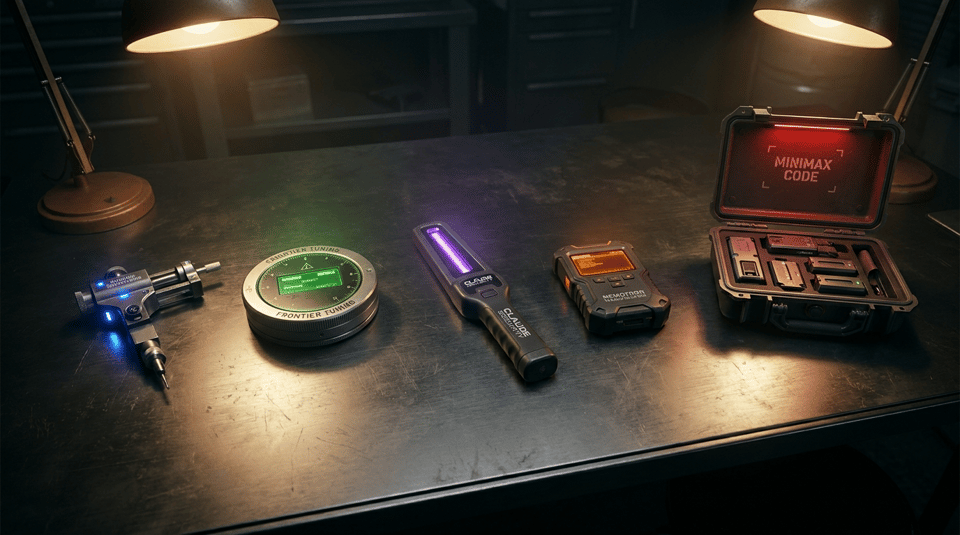
Anthropic Dynamic Workflows and Effort Control: Multi-step agent orchestration via Claude API. Effort control adjusts compute per request. Standard pricing at $5/$25 per M tokens. Use Dynamic Workflows for multi-step planning tasks; use effort control to reduce cost on high-volume, lower-stakes requests. [1]
Microsoft Frontier Tuning: Fine-tuning platform for customizing MAI models for domain-specific workflows without building from scratch. Available through Azure AI. Wait for independent verification of the 10x efficiency claim before committing. [5]
NVIDIA Cosmos 3 for Physical AI: First open omnimodal model for robotics, AV, and digital twin applications. Five modalities in a single system. Weights on HuggingFace (nvidia/cosmos3) [45]. Includes Cosmos3OmniPipeline in Diffusers and six synthetic-data datasets. [7]
GitHub Copilot AI Credits: Token-based billing replaced premium requests on June 1. Code completions unlimited; agents consume credits at model API rates. Pro: 1,500 credits ($10/mo). Pro+: 7,000 ($39/mo). Max: 20,000 ($100/mo). Model credit consumption before committing to agentic workflows. [35]
MiniMax M3 and MSA Architecture: Open-weight 550B model with Multi-head Sparse Attention reducing per-token compute to 1/20th at full context. Consider for long-context workloads where inference cost is a bottleneck. Verify the 1/20th claim independently before production deployment. [11]
NVIDIA Nemotron 3.5 Content Safety: 4B-parameter open guardrail model. Customizable safety categories for enterprise-specific policies. Handles text and image inputs. Available on HuggingFace and build.nvidia.com. [10]
Performance and Benchmarks
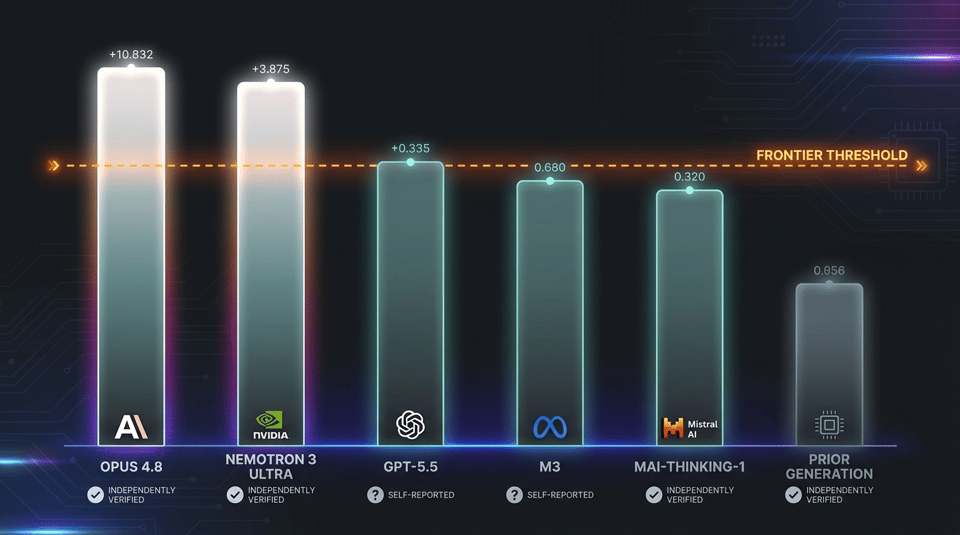
The Self-Reporting Problem
Every major model release in this cycle leads with vendor-reported benchmarks. Opus 4.8's 69.2% SWE-bench Pro comes from Anthropic's own runs [1]. Microsoft's claim that MAI-Thinking-1 matches leading models comes from Microsoft's own evaluations [5][46][47]. NVIDIA's "up to 5.9x throughput" for Nemotron 3 Ultra is self-reported [6][41]. MiniMax's claim that M3 surpasses GPT-5.5 comes from MiniMax [11].
SWE-bench Pro has a transparent methodology that makes results more reproducible, and the 10.6-point gap Opus 4.8 holds over GPT-5.5 is likely genuine [1]. But GDPval-AA is relatively new with limited independent evaluation history, and the MAI efficiency claims have no external verification [5][46].
The Stanford HAI AI Index 2026, a 400-page annual report released in April, found that coding benchmarks are approaching ceiling performance, making them less discriminating between models [12]. As benchmarks saturate, the differences between frontier models narrow, making independent verification essential to distinguish capability from marketing. The index also found the US-China frontier model gap has effectively closed — confirming what MiniMax M3's release demonstrates [12].
The Open-Weight Benchmark Gap
The gap between the best proprietary model (Opus 4.8 at 69.2% SWE-bench Pro) and the best open-weight model (M3 at 59.0%) is approximately 10 points [1][11]. This gap has narrowed from 15+ points in prior cycles. If it continues to narrow at this rate, the economic rationale for proprietary model subscriptions weakens: a 10-point benchmark gap that costs 20x the compute is a tough value proposition.
Closing Takeaway
The partnerships that defined the AI industry for three years are coming apart — and every player is choosing the same replacement strategy: build it yourself. Microsoft built its own models. Anthropic built its own security infrastructure and compute supply chain. NVIDIA built its own PC, its own models, and its own physical-AI platform. OpenAI built its own consulting arm. SpaceX's IPO filing reveals an AI division losing billions while paying a competitor $15 billion a year for compute.
The US government endorsed voluntary coordination over mandatory regulation [23][36]. The EU delayed enforcement [25]. The first appellate ruling on AI fair use is days away [28]. The only framework still standing is the one each company builds for itself.
Watch for three signals in the next two weeks: SpaceX prices its IPO on June 12, potentially triggering the $60 billion Cursor acquisition [17][18]. The Third Circuit hears oral arguments in Thomson Reuters v. Ross Intelligence on June 11 — the first appellate ruling on AI training data fair use [28]. And Google is expected to launch Gemini 3.5 Pro with a 2-million-token context window [13], which would reset the frontier benchmark race once again.
For practitioners, the implication is straightforward: multi-vendor, multi-model, multi-cloud is no longer a best practice — it is a survival strategy. Build on open weights where you can. Verify every benchmark claim independently. And assume that every partnership in AI has an expiration date.
Liked this issue? Forward it to a colleague who needs to stay ahead.
Subscribe to The MediaDataFusion Signal
References
Anthropic. "Claude Opus 4.8." Anthropic Blog. https://www.anthropic.com/news/claude-opus-4-8. Accessed 2026-06-08.
Anthropic. "Claude Opus 4.8" (Mythos-class announcement). Anthropic Blog. https://www.anthropic.com/news/claude-opus-4-8. Accessed 2026-06-08.
Forbes. "Anthropic's Guarded Mythos Model Is Headed For Wider Release." https://www.forbes.com/sites/ronschmelzer/2026/05/29/anthropics-guarded-mythos-model-is-headed-for-wider-release/. Accessed 2026-06-08.
TestingCatalog. "Anthropic Started Red Teaming New Mythos Models." https://www.testingcatalog.com/anthropic-started-red-teaming-new-mythos-models-first-results/. Accessed 2026-06-08.
Microsoft AI. "Building a Hill-Climbing Machine: Launching Seven New MAI Models." https://microsoft.ai/news/building-a-hillclimbing-machine-launching-seven-new-mai-models/. Accessed 2026-06-08.
NVIDIA. "NVIDIA at COMPUTEX 2026: GeForce RTX Announcements." https://www.nvidia.com/en-us/geforce/news/computex-2026-nvidia-geforce-rtx-announcements/. Accessed 2026-06-08.
NVIDIA Research. "Cosmos 3." https://research.nvidia.com/labs/cosmos-lab/cosmos3/. Accessed 2026-06-08.
Tom's Hardware. "Nvidia Unveils RTX Spark Superchip at Computex 2026." https://www.tomshardware.com/laptops/nvidia-unveils-rtx-spark-superchip-at-computex-2026-new-platform-promises-to-turn-windows-into-an-agentic-ai-os-with-arm-cpu-blackwell-gpu-and-128gb-unified-memory. Accessed 2026-06-08.
NVIDIA Developer Blog. "Inside the NVIDIA Rubin Platform: Six New Chips, One AI Supercomputer." https://developer.nvidia.com/blog/inside-the-nvidia-rubin-platform-six-new-chips-one-ai-supercomputer/. Accessed 2026-06-08.
Hugging Face. "NVIDIA Nemotron 3.5 Content Safety." https://huggingface.co/nvidia/Nemotron-3.5-Content-Safety. Accessed 2026-06-08.
MiniMax. "MiniMax M3 Open-Weight Release." MiniMax Official Blog. https://www.minimaxi.com. Accessed 2026-06-08.
Stanford HAI. "The 2026 AI Index Report." https://hai.stanford.edu/ai-index/2026-ai-index-report. Accessed 2026-06-08.
Google Blog. "Gemini 3.5: Frontier Intelligence with Action." https://blog.google/innovation-and-ai/models-and-research/gemini-models/gemini-3-5/. Accessed 2026-06-08.
Anthropic. "Anthropic Series H Funding." Anthropic Blog. https://www.anthropic.com. Accessed 2026-06-08.
Fortune. "Anthropic S-1 Confidential Filing." https://fortune.com. Accessed 2026-06-08.
The VC Corner. "SpaceX SPCX IPO S-1 Full Teardown." https://www.thevccorner.com/p/spacex-spcx-ipo-s1-teardown-valuation-2026. Accessed 2026-06-08.
CNBC. "SpaceX Targets Fixed $135 IPO Price for Roadshow." https://www.cnbc.com/2026/06/03/spacex-ipo-stock-price-roadshow-musk.html. Accessed 2026-06-08.
ByteIota. "SpaceX Strikes $60B Deal for Cursor AI Coding Startup." https://byteiota.com/spacex-strikes-60b-deal-for-cursor-ai-coding-startup/. Accessed 2026-06-08.
AI Biz Insider. "Microsoft Passed on Cursor — SpaceX Offered $60B." https://aibizinsider.com/2026/04/23/spacex-cursor-60b-deal-microsoft-passed/. Accessed 2026-06-08.
OpenAI. "OpenAI Launches the OpenAI Deployment Company." https://openai.com/index/openai-launches-the-deployment-company/. Accessed 2026-06-08.
CNBC. "Cerebras Starts Trading on Nasdaq After IPO." https://www.cnbc.com/2026/05/14/cerebras-cbrs-stock-trade-nasdaq-ipo.html. Accessed 2026-06-08.
Semiconductor Industry Association / Deloitte. "Powering AI: The Semiconductor Ecosystem at the Foundation of Data Centers." https://www.semiconductors.org/wp-content/uploads/2026/05/Powering-AI_The-Semiconductor-Ecosystem-at-the-Foundation-of-Data-Centers_report.pdf. Accessed 2026-06-08.
The White House. "Promoting Advanced Artificial Intelligence Innovation and Security." Executive Order. https://www.whitehouse.gov/presidential-actions/2026/06/promoting-advanced-artificial-intelligence-innovation-and-security/. Accessed 2026-06-08.
The White House. "Fact Sheet: President Donald J. Trump Promotes Advanced Artificial Intelligence Innovation and Security." https://www.whitehouse.gov/fact-sheets/2026/06/fact-sheet-president-donald-j-trump-promotes-advanced-artificial-intelligence-innovation-and-security/. Accessed 2026-06-08.
Travers Smith. "EU Agrees to Delay Key AI Act Compliance Deadlines." https://www.traverssmith.com/knowledge/knowledge-container/eu-agrees-to-delay-key-ai-act-compliance-deadlines/. Accessed 2026-06-08.
Latham & Watkins. "AI Act Update: EU Resolves to Change Rules and Extend Deadlines." https://www.lw.com/en/insights/ai-act-update-eu-resolves-to-change-rules-and-extend-deadlines. Accessed 2026-06-08.
Hogan Lovells. "EU Legislators Agree to Delay for High-Risk AI Rules." https://www.hoganlovells.com/en/publications/eu-legislators-agree-to-delay-for-highrisk-ai-rules. Accessed 2026-06-08.
LinkedIn / Perkins Coie. "Thomson Reuters v. Ross Intelligence: Third Circuit Appeal." https://perkinscoie.com/insights/update/fair-use-defense-failed-thomson-reuters-v-ross-jury-still-out-generative-ai. Accessed 2026-06-08.
DWT. "Thomson Reuters v. Ross Intelligence: Copyright, Fair Use, and AI Training Data." https://www.dwt.com/blogs/artificial-intelligence-law-advisor/2025/02/reuters-ross-court-ruling-ai-copyright-fair-use. Accessed 2026-06-08.
Reed Smith. "Court Shuts Down AI Fair Use Argument in Thomson Reuters v. Ross Intelligence." https://www.reedsmith.com/articles/court-ai-fair-use-thomson-reuters-enterprise-gmbh-ross-intelligence/. Accessed 2026-06-08.
Jenner & Block. "Court Decides That Use of Copyrighted Works in AI Training Is Not Fair Use." https://www.jenner.com/en/news-insights/client-alerts/court-decides-that-use-of-copyrighted-works-in-ai-training-is-not-fair-use-thomson-reuters-enterprise-centre-gmbh-v-ross-intelligence-inc. Accessed 2026-06-08.
Debevoise & Plimpton. "An Early Win for Copyright Owners in AI Cases." https://www.debevoise.com/insights/publications/2025/02/an-early-win-for-copyright-owners-in-ai-cases-as. Accessed 2026-06-08.
TechCrunch. "Anthropic Scales Claude Mythos to Critical Infrastructure in 15 Countries." https://techcrunch.com/2026/06/02/anthropic-scales-claude-mythos-to-critical-infrastructure-in-15-countries/. Accessed 2026-06-08.
CNBC. "Anthropic Expands Mythos to 150 Additional Organizations." https://www.cnbc.com/2026/06/02/anthropic-mythos-ai-project-glasswing.html. Accessed 2026-06-08.
GitHub Blog. "GitHub Copilot Is Moving to Usage-Based Billing." https://github.blog/news-insights/company-news/github-copilot-is-moving-to-usage-based-billing/. Accessed 2026-06-08.
AP News. "Trump Signs an Executive Order to Vet Top AI Models for Security Risks." https://apnews.com/article/trump-ai-executive-order-e41af74f7b0865482f07d10fe7a50fe3. Accessed 2026-06-08.
Mayer Brown. "President Trump Signs Executive Order on Advanced AI Innovation and Security." https://www.mayerbrown.com/en/insights/publications/2026/06/president-trump-signs-executive-order-on-advanced-ai-innovation-and-security. Accessed 2026-06-08.
Ropes & Gray. "Trump's AI Cybersecurity Order: A Voluntary Framework with Mandatory Implications." https://www.ropesgray.com/en/insights/alerts/2026/06/trumps-ai-cybersecurity-order-a-voluntary-framework-with-mandatory-implications. Accessed 2026-06-08.
Federal News Network. "AI Executive Order Sets Stage for New Cybersecurity Directives." https://federalnewsnetwork.com/cybersecurity/2026/06/ai-executive-order-sets-stage-for-new-cybersecurity-directives/. Accessed 2026-06-08.
Council on Foreign Relations. "Assessing Trump's Executive Order on AI Oversight." https://www.cfr.org/articles/assessing-trumps-executive-order-on-ai-oversight. Accessed 2026-06-08.
TechSpot. "Nvidia Unveils Vera Rubin Early, Signaling a Faster AI Cadence." https://www.techspot.com/news/110812-nvidia-unveils-vera-rubin-early-signaling-a-faster-ai.html. Accessed 2026-06-08.
NVIDIA Investor Relations. "NVIDIA Releases Major Collection of Open Source Agent Tools and Skills for Physical AI." https://investor.nvidia.com/news/press-release-details/2026/NVIDIA-Releases-Major-Collection-of-Open-Source-Agent-Tools-and-Skills-for-Physical-AI/default.aspx. Accessed 2026-06-08.
Intel Newsroom. "Intel Announces New AI Innovations at Computex." https://newsroom.intel.com/artificial-intelligence/intel-announces-new-ai-innovations-at-computex. Accessed 2026-06-08.
Data Center Dynamics. "Cerebras Debuts on Nasdaq at $350 a Share as Company's Market Cap Hits $95B." https://www.datacenterdynamics.com/en/news/cerebras-debuts-on-nasdaq-at-350-a-share-as-companys-market-cap-hits-95bn/. Accessed 2026-06-08.
Hugging Face Blog. "Welcome NVIDIA Cosmos 3: The First Open Omni-Model for Physical AI." https://huggingface.co/blog/nvidia/cosmos-3-for-physical-ai. Accessed 2026-06-08.
GeekWire. "Microsoft Unveils Seven Homegrown AI Models in New Bid for Long-Term Self-Sufficiency." https://www.geekwire.com/2026/microsoft-unveils-seven-homegrown-ai-models-in-bid-for-long-term-self-sufficiency/. Accessed 2026-06-08.
Forbes. "Microsoft Builds Its Own AI Stack to Cut OpenAI Dependence." https://www.forbes.com/sites/janakirammsv/2026/06/07/microsoft-builds-its-own-ai-stack-to-cut-openai-dependence/. Accessed 2026-06-08.
TechCrunch. "OpenAI Releases GPT-5.5 Instant, a New Default Model for ChatGPT." https://techcrunch.com/2026/05/05/openai-releases-gpt-5-5-instant-a-new-default-model-for-chatgpt/. Accessed 2026-06-08.
CNBC. "OpenAI Announces Latest Artificial Intelligence Model." https://www.cnbc.com/2026/04/23/openai-announces-latest-artificial-intelligence-model.html. Accessed 2026-06-08.
TechStackIPO. "SpaceX IPO June 2026: S-1 Confirmed Filed May 20." https://www.techstackipo.com/ipo/spacex. Accessed 2026-06-08.
AI Magazine. "Why SpaceX Is Planning a US$60bn Takeover of Cursor." https://aimagazine.com/news/why-spacex-is-planning-a-us-60bn-takeover-of-cursor. Accessed 2026-06-08.
USA Today. "Trump AI Executive Order: What to Know." https://www.usatoday.com/story/news/2026/06/03/trump-ai-executive-order-what-to-know/90383757007/. Accessed 2026-06-08.
USA News. "OpenAI Creates New Unit With $4 Billion Investment to Aid Corporate AI Push." https://money.usnews.com/investing/news/articles/2026-05-11-openai-creates-new-unit-with-4-billion-investment-to-aid-corporate-ai-push. Accessed 2026-06-08.